

In January 2026, YouTube CEO Neal Mohan admitted in his annual letter to creators that “AI slop” has become a problem the platform now has to manage as a priority.
The admission itself is hardly surprising. Anyone who has spent time on YouTube Shorts recently has probably felt it already.
Right now, roughly one in five YouTube Shorts recommended to new users is AI-generated.
The majority of AI-generated YouTube shorts are optimised for the algorithm in a similar way like fast fashion is optimised for retail: designed to be produced quickly, consumed quickly, … and replaced just as quickly .
The real issue is the scale at which such content can now be easily mass-produced at a fraction of the time it takes a human YouTuber to produce a single video.
And with the metoric rise of AI agents and tools like Claude Code, fully automated YouTube production pipelines are no longer impractical.
It is no longer difficult to imagine a YouTube ecosystem where AI-generated content vastly outnumbers human-made videos.
Which is precisely why YouTube has begun cracking down on channels monetising AI-slop content before the problem gets out of hand.
At the same time, 2026 is also the year we see podcasting gaining serious traction on YouTube as a video format.
The natural question we need to ask ourselves is:
Will AI-generated podcasts start flooding podcasting platforms the way AI Slop has in YouTube?
My long-held belief is that podcasting may turn out to be one of the last online content formats capable of resisting the tide of AI slop.
Let me explain why here — and it may help you either rethink or affirm the need for a niche podcast to serve your brand or business.
Table of Contents
What “AI Slop” Actually Is (And Why AI-Generated Content Scales So Fast)
To be fair, not all AI content is sloppy. Some AI-generated channels still rack up significant views and followers. One example is the ubiquitous Asian Guy Jon (AG), whom you may recognise if you follow financial markets content on YouTube.
What people refer to as “AI slop” should not simply be understood as low-quality content made with AI.
It is content that exists purely because AI makes mass production possible and profitable.
In other words, the defining feature of AI slop isn’t bad content. It is industrialised content at scale.
A study by Kapwing analysing 15,000 trending YouTube channels found 278 producing nothing but AI-generated content. Together, they had accumulated 63 billion views and an estimated US$117 million in annual ad revenue.
Reporting by The Guardian highlighted channels like Bandar Apna Dost, an Indian channel featuring a hyper-realistic AI-animated monkey placed in melodramatic human situations. The channel alone has generated roughly 2.4 billion views, translating to an estimated US$4.25 million in annual revenue.
These Shorts operate on a pooled revenue model that rewards volume over quality.
AI tools are exceptionally good at generating visual hooks designed to stop a thumb scroll for fifteen seconds. The content doesn’t need to be good. It just needs to avoid getting swiped away immediately.
This is why AI slop naturally concentrates in short-form videos. The algorithm and the business model were almost perfectly designed to reward it.
Podcasting, by contrast, operates on a very different set of behavioural and consumption incentives.
Podcast audiences are not grazing the way viewers do on short-form video.
A typical podcast episode runs anywhere from thirty minutes to an hour. The viewer or listener presses play knowing they are entering a longer conversation. They consume the content while commuting, exercising, or working through the day. The format rewards depth, familiarity, and continuity.
That behavioural shift changes the economics of attention. It becomes far harder for disposable, algorithm-optimised content to compete with a voice the listener or viewer has chosen to spend time with.
Are AI-Generated Podcasts Taking Over Podcast Platforms?
Yes, but not in a damaging way you might expect with YouTube Shorts.
When Google launched NotebookLM’s Audio Overview feature in late 2024, the reaction was immediate fascination. The tool could take any document and generate a remarkably convincing two-person podcast conversation in minutes.
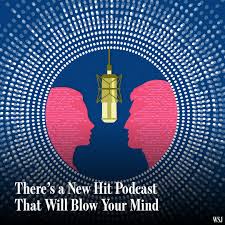
The Wall Street Journal called it “a new hit podcast that will blow your mind.”
The viral moment was enough to prompt Listen Notes — one of the leading podcast directories — to build a dedicated NotebookLM Detector tool. By October 2024, it had already identified more than 280 shows generated with the AI tool.
Listen Notes founder Wenbin Fang was blunt about what this represented:
“NotebookLM has made it easier to mass-produce low-quality, fake content.”
Just a few months back, news of an AI podcasting startup “Inception Point” churning out 3,000 podcast episodes across 5000 shows a week caught my attention.
But, most episodes run under five minutes, are front- and back-loaded with ads, and many shows stop before reaching five episodes.
So, in a way, the AI slop problem has reached the podcast feed, but the hurdle in getting these AI podcasts traction and attention is where podcasting diverges sharply from YouTube.
On YouTube Shorts, AI slop works and can scale up fast and indefinitely. This costs YouTube money because of its monetisation model.
In podcasting, however, platforms like Apple Podcasts and Spotify do not incentivise podcasters in the same way.
Early evidence suggests AI-generated content in podcasts is hitting a wall, as audiences aren’t sticking around or coming back for AI content — even if your podcasts are backed by a big brand.
Steven Bartlett Tried AI Podcasting. And Stopped After Four Episodes.
Steven Bartlett’s FlightStory Studio — the company behind The Diary of a CEO, currently the second-largest host-led podcast globally — launched an AI-generated podcast in mid-2025 called 100 CEOs.
The premise was elegant: stories of the world’s most influential entrepreneurs, written by Bartlett, narrated by an AI clone of his voice, with AI-generated animation handling the rest. Tools from ElevenLabs, Runway, and Wondercraft were used in production.
FlightStory was transparent about the experiment. Co-founder Georgie Holt said at launch: “Steven is still very involved in the scripting and the writing. He still passionately believes, as we do, in the human ability to tell stories. Everything else was done by AI.”
The “best-performing” episode about Steve Jobs — arguably the most compelling subject for a business-focused audience — accumulated around 25,000 views on YouTube. Compare that to the millions Bartlett regularly attracts on DOAC. Audience reviews landed somewhere between polite and damning: “I’m a huge fan, but this just feels like an AI podcast with zero soul.”
According to Claricast’s 2026 podcast industry analysis, FlightStory appears to have quietly shelved the project. The feed stopped after four episodes.
Four episodes. From the studio behind one of the most professionally produced and distributed podcasts in the world.
If FlightStory can’t make AI podcasting work, that tells you something fundamental about the AI-nature format itself — not about the quality of the tools.
The Washington Post Learned This the Hard Way
The Steven Bartlett case isn’t an anomaly. In December 2025, The Washington Post launched “Your Personal Podcast” — an AI-generated, personalised audio service for app users. Within 48 hours, the project was in crisis.
Internal tests, which Semafor later obtained, showed that between 68% and 84% of scripts generated by the tool had failed the Post’s own quality standards across three rounds of testing.
The AI was fabricating quotes, misattributing statements to real sources, and presenting editorial commentary as the newspaper’s official position.
Journalists described it internally as “a total disaster.” One editor wrote: “Never would I have imagined that the Washington Post would deliberately warp its own journalism and then push these errors out to our audience at scale.”
The Post’s product team had known about the failure rate before launch. They launched anyway, betting they could “iterate through” the problems in public.
The audience wasn’t interested in being a beta test. Neither was the newsroom.
The key point isn’t just that the AI made errors. All AI does.
The point is that those errors are immediately disqualifying in a podcast context in a way they simply aren’t in a fifteen-second Shorts clip.
A viewer who watches a cartoon monkey in a dramatic situation doesn’t have a trust relationship with that channel. A podcast listener or viewer who tunes into what they believe is authoritative journalism does.
Podcasting runs on trust, especially thought-led podcasts driven by conversations or interviews with the best thought leaders, smart thinkers, or even expert celebrities.
With the level of distrust and misinformation in an AI-almost-everything world, the rejection of AI in favour of true human ingenuity and insights in podcasting is clear.
Why Podcasting Resists AI Slop (And Always Will)
Much has been said in my other posts about the parasocial connection inherent in the podcasting format itself.
Such a parasocial bond is not transferable to AI. Audiences sense — viscerally, even if they can’t always articulate why — when the human element has been removed.
A Raptive survey of 3,000 US adults found that perceived AI content causes consumer trust to drop by approximately 50%, regardless of whether the content actually is AI-generated. Perception alone collapses the relationship.
And this isn’t unique to podcasting. As AI gains prominence and dominance, the threshold rejection of anything AI for stuff we value — such as trust and creativity– is getting lower.
Like the Netherlands’ 2025 McDonald Christmas ad, made wholly by AI, which I really like. (Yes, I confess, your honour!)
The backlash illustrates something interesting about public perception of AI.
The footages were 100% generated. But the creative concept was crafted by a human agency. The months of AI-generation to stitch the right footages was painstakingly human.
But it gets slapped with an AI-slop label and the ad had to be pulled within days of its launch.
So, while we have seen AI-generated podcasts being uploaded into the various directories, they remain entrenched in the sewer levels of the 4.6 million registered podcasts in 2026.
The podcasts that survive are not simply the ones that show up every week. They’re the ones that your audience can’t imagine not having. That relationship is built through accumulated time spent with a specific voice, a specific way of seeing the world, a specific willingness to think out loud without rushing to conclusions.
AI can produce more episodes. It cannot produce more of that.
Still, AI-generated podcasts are not going away. NotebookLM and AI podcast startups like Inception Point will keep improving.
The podcast feeds will keep filling. And some categories, such as educational content, news summaries, explainer formats, will be contested ground for years to come.
What This Means If You’re Building a Podcast for Your Business
The practical implication of all this is straightforward, though it runs counter to the temptation to use AI to produce more content faster.
The podcasts that will matter in 2026 and beyond are not the ones with the highest output.
Instead, the podcasts that will do well are those with the clearest or insightful points of view, stimulating discussions, and the deepest relationship with a specific audience. They’re the ones where the host’s actual thinking is irreplaceable, because that’s precisely what the audience came for.
AI can assist with research, transcription, show notes, and distribution. When used that way, it’s genuinely useful.
But the moment AI replaces human thinking at the centre of the episode, you’ve removed the only thing that actually makes a podcast worth returning to.
Downloads have never been the point. The relationship is the point.
In an internet optimised for infinite content, the scarce resource is no longer production. It is attention.
And right now, in a content ecosystem increasingly colonised by AI slop, a podcast built around a genuine human perspective isn’t just a creative choice.
It’s your competitive advantage for thought leadership or standing out in your niche and avoid using AI to parrot what everyone is saying.
Adrian Ng is a podcast content strategist and producer at Backbeat Studios, Singapore. He helps B2B brands and executives build podcasts that drive real business relationships — not just download numbers.
Related reading: