

For nearly 20 years, Backbeat Studios has evolved alongside the changing world of audio in Singapore — from music recording and voiceover to audiobooks, branded content and podcast production. What began as a rehearsal and recording studio in 2006 has become a front-row seat to how people listen, learn and connect through sound.
In 2008, we were already producing a weekly football podcast, years before podcasting became mainstream. There was no Spotify boom, no video podcast gold rush, no fashionable language around “content strategy”.
Just a belief that voice, delivered consistently, could build attention and loyalty.
Looking back, that instinct has shaped Backbeat Studios since 2006.
But this is not simply a story about formats changing over time.
It is a story about how our relationship with audio changed too. From passion, to craft, to responsibility, and finally to a clearer sense of what matters most.
20 years of Backbeat Studios in a glance
We Began with Passion
The Early Years: Music, Bands and the Indie Scene
Backbeat Studios started in 2006 as a music rehearsal and recording studio in Singapore, during a vibrant period for the local indie music scene. Bands were forming, original music was gaining traction, and independent artists were looking for places to rehearse, create and be heard.
In those early years, our work centred on band rehearsals, music recording sessions, and supporting emerging acts who were — or hoped to be — part of that creative wave.
Whether it was an original song or a cover track, the goal was to capture the right energy and spark. Many indie bands preferred recording live as a full unit rather than building songs layer by layer to a metronome, which often felt too rigid or unnatural.
That meant handling demanding live multitrack sessions using anywhere from 10 to 18 microphones to capture drums, guitars, bass, vocals and room ambience with clarity and separation.
What Those Early Years Taught Us
Looking back, it was one of the best training grounds imaginable.
You learned quickly that good sound is not created by gear alone. It comes from judgement, preparation and understanding what the performance needs in the moment, beyond just textbook mic placements and EQ adjustments.
Just as importantly, they taught us to respect the commitment of young bands who were paying out of their own pockets to pursue something they believed in. In many ways, those early years sharpened not just our technical skills, but our instincts and working ethic.
A First Brush with the Big League: The 881 movie
In our first year, we also contributed to audio recording work for the soundtrack of “881“, Royston Tan’s getai musical that went on to become Singapore’s top-grossing Asian film in 2007.
That project gave Backbeat Studios the opportunity to work alongside accomplished musicians and producers from the regional Mandopop scene, including Eric Ng, Jim Lim and 伍家辉.
We gained first-hand insight into the workflows, discipline and production standards required to take a song from the initial idea to a polished release.
Through that collaboration, what stood out most was not celebrity, but ethos.
True professionals carried humility. Great results did not come from talent alone, but from preparation, rehearsals and the ability to execute subtle details consistently.
That lesson would stay with us long after the music years — and would continue to shape how we approached voiceovers, narration and every other form of audio work that followed.
Then We Learned Craft
The Voiceover Decade: Advertising and Commercial Audio
As the years moved on, our work increasingly shifted from bands to voice.
Around 2009 to 2010, our studio increasingly became involved in voiceover recording for advertising, commercials, online videos and corporate content.
One of the earliest projects I could remember was a short advertisement for Swensen’s with a simple line: “This year, celebrate your birthday at Swenson’s. Happy birthday!” The voice talent was Samuel Chong, a seasoned professional of the voiceover industry.
We captured a strong first take almost immediately — the clients were already happy with.
But it all seemed a little too effortless for the studio hour that had been booked, didn’t it?
So Samuel decided to give us more options. What followed were multiple variations, each with subtle shifts in emphasis, emotion and pacing.
How many ways can you say a birthday greeting?
As it turns out, at least ten!
As one of our earliest voiceover recording projects, that was a small session with an outsized lesson. I began to see the hidden craft of great voice work: tiny adjustments in tone, timing and intention can completely change how a message lands.
The Collaborators Who Opened New Doors
While that early session was an early glimpse into the craft, it was Singapore voice artist Evon Loh who truly opened the door to the wider voiceover industry. Through our collaborations, came scripts, agencies and brands of every kind — each requiring its own tone, rhythm and purpose.
Over time, those sessions sharpened a different set of muscles.
You learn to hear what others miss. You learn to move quickly. You learn that timing, diction and intention often matter more than expensive effects.
And you learn that such skillful professionalism — and the 10,000 hours it may have taken to hone it — is often the pride that stays invisible to outsiders.
Then We Understood Responsibility
E-Learning, Corporate and Government Audio Projects
As e-learning expanded across the 2010s, many organisations invested in digital training, internal communications and learning platforms.
Backbeat Studios began supporting local and regional banks, ministries, statutory boards and training providers with narration recording, bilingual voice content and audio production.
To some, this kind of work may have seemed less glamorous than music or advertising.
But it became one of the most formative phases of our journey.
These projects demanded speed, consistency and precision under pressure. Sessions often involved large volumes of script, tight timelines and clients seated in the control room expecting polished results quickly.
Speed, Precision and Reading Waveforms
It was during this period that I developed what felt like an unusual superpower: speed editing.
Not just listening to audio — but reading waveforms almost like language.
With enough repetition, I began to recognise the visual shapes of phrases, breaths, hesitations and clean takes. With instinct, keyboard shortcuts and experience, I could move rapidly through a Pro Tools session, selecting, comping and delivering usable takes in real time.
To an untrained observer, it could look like sleight of hand.
One MOE officer from CPDD once remarked that the speed at which waveforms were being cut and assembled was unlike anything he had seen at other recording studios.
Becoming a Custodian of Spoken Content
But beyond technical efficiency, these projects taught something deeper.
Audio often carries information that people genuinely need.
Be it a training module. A public announcement. A lesson. An explanation.
In these contexts, sound is not there to impress. It is there to help people understand a certain message.
That responsibility appealed to me. Many people enter audio through a love of music. I did too.
But over time, I found equal meaning in becoming a custodian of spoken content — helping shape how ideas, lessons and messages during the voiceover recording stage, before they reached the masses or people they were meant for.
My background in Chinese language also proved unexpectedly valuable, allowing us to support bilingual and Chinese-language projects with greater sensitivity to nuance, pronunciation and meaning, such as the collaborative project with SPH to convert the 508 pages of Lee Kuan Yew’s “Hard Truths” into a Mandarin audiobook as part of to commemorate the 100th year birth anniversary of Singapore’s founding Prime Minister.
Then We Learned to Shape Listening Experiences
Broadcast, Film Mixing and the Changing Media Landscape
Between roughly 2014 and 2022, Backbeat Studios became more involved in broadcast post-production, dubbing, film mixing and audio finishing for television formats.
One early chapter was contributing voiceover dubbing work for Badminton Unlimited, a weekly sports magazine show produced for the Badminton World Federation (BWF) and distributed on cable television.
Working alongside producers Faz, Elaine and Sharkee, and presenters Kelly Latimer and Paula Malai Ali showed me to a different calibre of editorial discipline, shaped by the unforgiving cadence of weekly broadcast delivery.
Faz, in particular, became a valuable collaborator and sounding board. Among the things he introduced me to was In the Blink of an Eye by legendary film editor Walter Murch — a book that argues, memorably, that emotion must take priority over technicalities in any edit.
But perhaps the more enduring lesson came from Faz’s observation about what separates a good producer from a great one: it is not how smoothly they execute when everything goes to plan. It is how they respond, adapt and make decisions when things do not.
Much like good sound engineers aren’t born under perfect recording conditions, but when the environment or the speaker’s delivery is less than ideal. That’s when one has to hone the craft of making good, sound judgment under pressure — a craft that no specification or checklist can fully teach.
How Technology Changed the Mix
That period also coincided with changes in how audiences were consuming media at home.
The rise of slim LCD and later LED flat-panel screens had a side effect few anticipated. Front-firing speakers gave way to bezel-mounted drivers, often firing downward or to the sides. Dialogue clarity suffered. Intelligibility — a word rarely discussed outside technical circles — became a pressing concern across the broadcast world. Some BBC TV series drew public criticism for being hard to follow. It was a “mumblegate” crisis — a number of productions were reportedly sent back for remixing after their initial episodes had aired.
For us, this reinforced a principle that still guides our work today:
Audio should never fight the audience.
Whether for television, branded video or podcasting, the listener should not need to struggle for meaning.
The Art Inside the Broadcast Mix
Work with Studio59 Concepts and producers such as Dzul Sungit and Remi also opened doors into travelogue and feature-film projects, where the demands of pacing, dynamics and emotional tone differed from commercial or corporate work.

These projects offered something technical knowledge alone could not. The dynamics of a magazine show — its pacing, the interplay between narration, music and ambient sound, the way energy rises and falls within a segment –these are judgements that no delivery specification can make for you.
Understanding the sonic tastes of different producers drew me into a deeper study of mixing styles, including comparing the US and UK versions of Gordon Ramsay’s Kitchen Nightmares.
Same host. Same premise Yet the two versions felt entirely different in rhythm, tone and texture.
The US version leaned into dramatic musical punctuation; the UK version was more restrained, more conversational, more willing to let silence breathe.
At the end of the day, the choice isn’t technical. It is one shaped by creative tast as well as practical decisions about how, where, and by whom the content is most likely to be experienced.
Beyond Surround Sound: The Search for What Comes Next
This was also the period that sharpened our thinking on audio delivery formats and the future of broadcast audio. While 5.1 surround sound was gaining traction in US television delivery, we made an early call that it was unlikely to take meaningful root in Singapore and even in the larger Asia region we work in.
Homes here are compact; home theatre setups are a luxury. In some ways, 5.1 felt like Blu-ray — a technically superior format that would struggle against the realities of how people actually lived.
Audio, we observed, had hit a ceiling that video had not. Video was making leap after leap in resolution. Audio, by contrast, seemed stuck; 24-bit/48kHz delivery was the broadcast standard, and there was no obvious format waiting to carry the next leap in listening experience.
That thinking led us toward a quiet experiment: working with Creative Labs Singapore and their SXfi spatial audio technology on an immersive sound design project for a CNA documentary recreating the 1963 Pulau Senang riot.

The question we were exploring was whether binaural audio could deliver the depth and spatial dimension that surround sound promised — through nothing more than a pair of headphones. It was an early signal that the future of immersive audio might not require larger rooms or elaborate speaker arrays, but rather sound design and mixing skills with a clear understanding of space, perception and what makes a listener feel present between a pair of headphones.
Podcasting Before Podcasts Were Mainstream:
The Football Fever Podcast experiment that began in 2011

Long before podcasts became a fashionable marketing channel, we had already seen the potential of spoken-word audio.
In 2011, Backbeat Studios produced a weekly football podcast called Football Fever, a two-year run covering international football stories and happenings with an Asian perspective.
Some of the very prominent sports presenters and journalists, Jason Dasey, Neil Humphreys, Mayur Bhanji, and Steve Lai, gathered every Tuesday night at the studio for more than two years, discussing football stories and happenings from the English Premier League as well as the local S-League.
At the time, it simply felt like an interesting project, figuring out the necessary tech stuff, file hosting, web publicity etc. Looking back, it contained many of the ingredients associated with successful podcasts today:
- a clear niche
- strong personalities and distinct on-air chemistry
- hosts or guests with opinions, insight and a recognisable voice
- consistent publishing
- audience connection
- multi-channel promotion
Long before video podcasts and creator-led shows became common, this project showed that spoken-word content could build loyalty when delivered regularly with wit substance and personality. It even secured a brand sponsorship deal with Coca-Cola at the time.
We did not realise it then, but we had already touched an enduring truth of the podcast media: audiences will build a habit of coming back to your show when the content delivers value for them consistently.
Today We Offer Authority
Long-Form Listening: The Audiobook Years
From the late 2010s onwards, we saw growing demand for audiobook recording, narrative audio and long-form spoken content.
Audiobooks demand a different discipline from advertising or music. They require stamina, pacing, consistency and sensitivity to nuance across entire chapters rather than thirty-second bursts.
As our audiobook work grew, it led to collaborations with international publishers including Penguin Random House, Simon & Schuster and HarperCollins. These projects connected us with producers and engineers across different markets, creating valuable exchanges in workflow, standards and ways to make long-form audio production both efficient and effective.
Closer to home, partnerships with Storytel and Epigram Books gave us the opportunity to help bring Singapore literature into audio form. In the process, we also explored how techniques honed over the previous decade—multitrack mixing, sound design and vocal production—could make audiobooks more immersive and cinematic without distracting from the text itself.

That chapter of work culminated in Backbeat Studios receiving the inaugural Best Audiobook Award at the Singapore Book Awards 2021 for our production of Impractical Uses of Cake by Yeoh Jo-Ann.
When Craft Travels: A Marvel Studios Session
Those accumulated years of craft also led to moments that once would have seemed unimaginable in our early band-room days.
One memorable example was hosting a remote ADR session for Marvel Studios’ What If…?, the first animated series in the MCU. The session featured Jeffrey Wright voicing The Watcher while connecting live to legendary sound master Doc Kane at Walt Disney Studios in California.
I still remember receiving a direct call from a US number:
“Hi, I’m Doc Kane from Walt Disney.”
Doc Kane is a widely respected sound engineer associated with Walt Disney Studios, recognised for helping craft the sonic identity of numerous Disney productions. Besides having an intuitive understanding of how sound supports cinematic storytelling, he is also known for his technical precision in execution.
For example, how he likes his U87 microphones set up exactly during an ADR session.

Bottom: Jeffrey Wright on a U87 for an ADR dub for Marvel’s What If.
For a studio that began with local indie bands in Singapore to managing a remote ADR session with Walt Disney Studios in Burbank, it was one of those moments that quietly reminds you where years of steady standards can lead.
Yet the real lesson was not about Hollywood glamour. It was that professional craft travels. Attention to detail, competence in managing a recording session, and consistency in output quality are recognised in every market.
How Podcasting Became the Natural Next Step
The period of COVID saw listening habits change. People made more room for stories, ideas and voices. Long-form audio found fresh momentum, and podcasting accelerated alongside it.
To many, podcasts felt like a new medium.
To us, they felt like a natural convergence of everything that had come before:
- performance instincts from music recording
- precision from voiceover work
- clarity from educational content
- narrative depth from audiobooks
- consistency learned from early podcasting experiments
That is how podcasting became the next logical chapter for our work, especially in the face of AI slop content that made the ingenuity and intellectual substance in podcasts more valued than ever.
Today, Backbeat Studios helps brands, organisations and subject-matter experts create podcasts that build trust, authority and real business relationships.
Because after enough years in audio, you begin to understand that people are not merely listening for polished sound.
They are listening for credibility, clarity and whether something is worth their time.
What 20 Years in Audio Taught Us
Looking back, the journey of Backbeat Studios was never just about changing formats.
It was a progression: from passion, to craft, to responsibility, and eventually to authority.
We began by chasing energy in music rooms. We learned precision through voiceover and commercial work. We discovered responsibility through educational and institutional content. And today, we help brands and leaders communicate with greater clarity through podcasts and long-form audio.
Along the way, one belief only grew stronger: sound is rarely an accessory.
It is often the bedrock of how a message is felt, trusted and remembered.
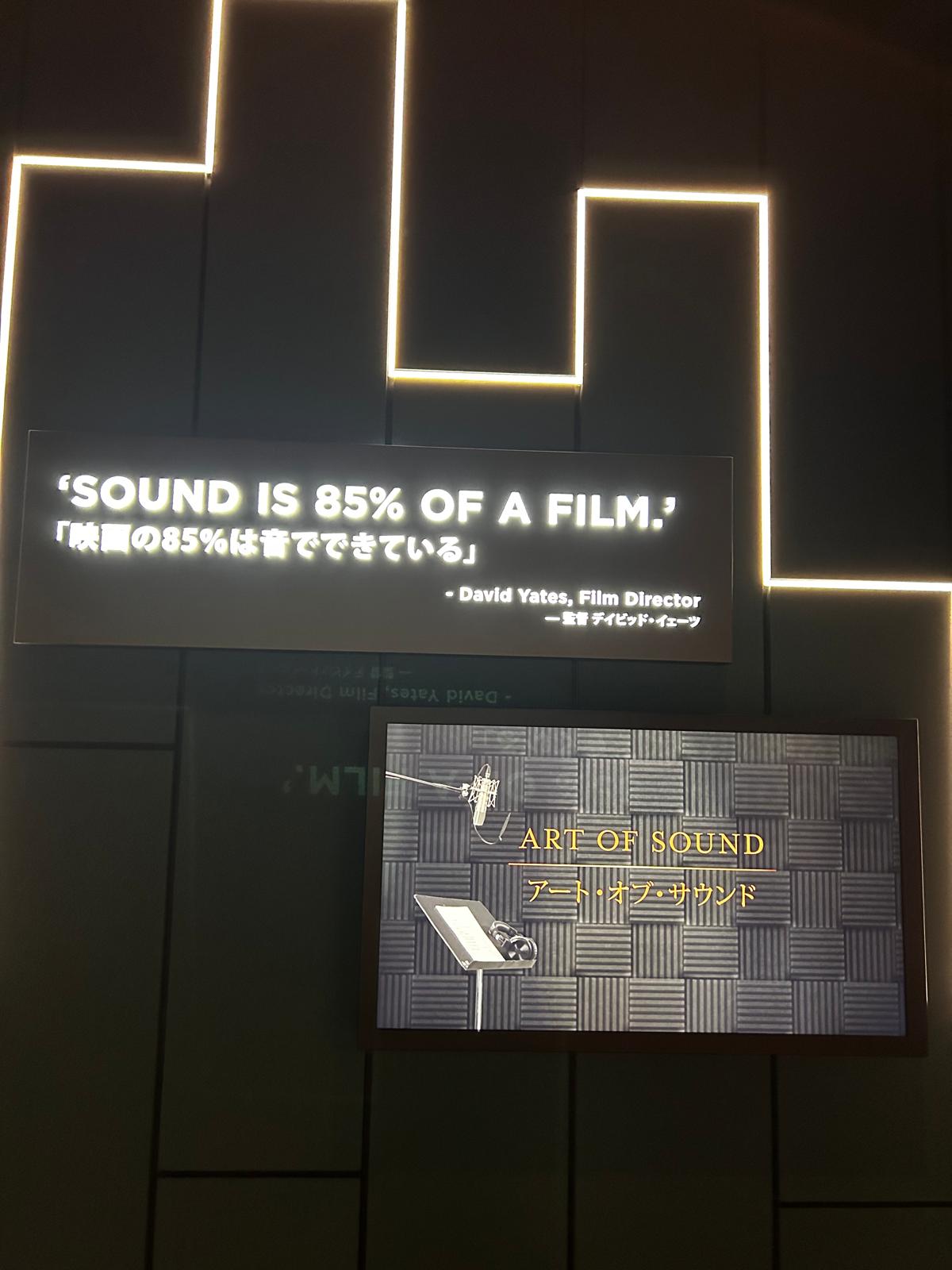
Whether in film, advertising, e-learning or podcasting, audio shapes emotion, pace, credibility and attention in ways audiences may not consciously notice, but instinctively respond to.
That is why recording studios should never be seen merely as places that “record sound”.
At our best, we are custodians of what goes out into the world.
In an age increasingly flooded by AI-generated content, synthetic sameness and disposable media, these fundamentals matter even more. When content becomes easier to produce, discernment becomes more valuable. When noise increases, trust stands out.
For clients, the real advantage of working with Backbeat Studios is not simply equipment or editing.
It is perspective.
Two decades of understanding how sound works psychologically with image, language and audience attention. Two decades of balancing creativity with commercial intent. Two decades of knowing when to enhance, when to restrain, and what makes people keep listening.
Formats will continue to evolve.
Human response changes far more slowly.
That has been the work since 2006.
And it still feels like we are only getting started.
Planning a Podcast in Singapore?
If you are exploring a branded podcast, executive podcast or thought-leadership show, Backbeat Studios can help you shape the strategy, production and sound behind it.