
What happens to podcasts now that YouTube has Shows?
YouTube introduced “Shows” this month. Creators in the Partner Program can now turn playlists into structured series: seasons, episode numbers, poster artwork, a browse page that looks a lot like Netflix, and placement in “Continue watching” and “Recommended shows.”
I’ve read a fair amount of commentary explaining what the feature does. Almost none of it asked the more interesting question.
YouTube Shows vs podcasts: what does the split actually mean, especially for podcasts?
I think the answer is good news, and I think it resolves an identity crisis the medium has been drifting through ever since podcasting went video.
In this article
Do podcasts need video in 2026?
Some early-generation podcasters still hold to the idea that a podcast is an audio-only product. That isn’t wrong about where podcasting came from. It’s simply no longer where the medium lives.
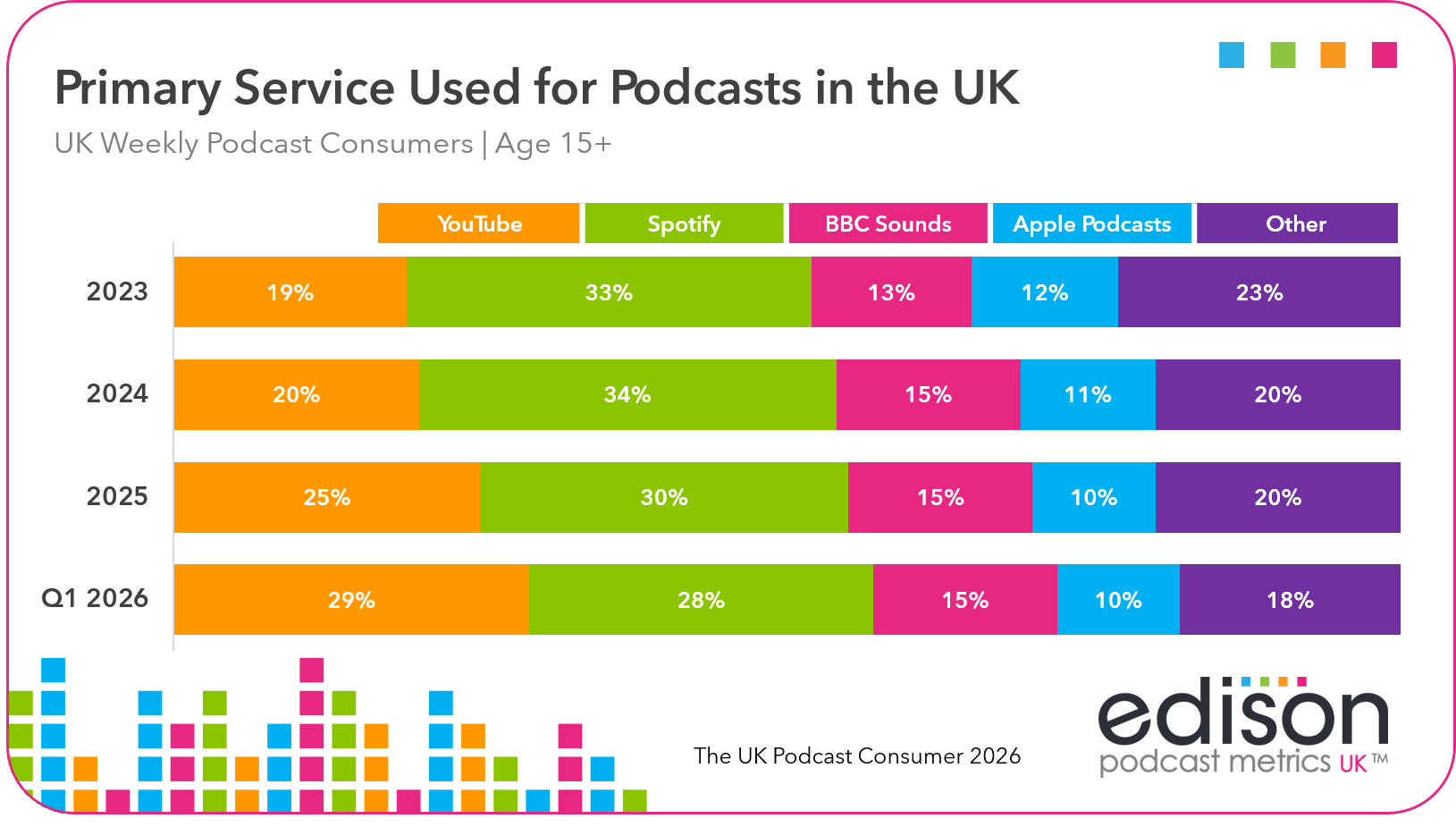
YouTube is now the most popular service for podcast consumption in the US, and as of this year, in the UK as well. Edison Research found that 29% of weekly British podcast listeners choose YouTube as the service they use most, ahead of Spotify at 28%, BBC Sounds at 15%, and Apple Podcasts at 10%. The US crossed that line two years earlier.
It isn’t only YouTube, either. Apple has been pushing video into Apple Podcasts, and Bloomberg reported in June that shows with video are seeing higher consumption there too, with Acast recording a 25% jump for video-enabled shows. Video isn’t a YouTube quirk. It’s where the medium went.
If you’re starting a podcast in 2026 without a camera, you’re opting out of your own distribution.
So this was never audio versus video. That argument is settled, and video won.
The live question is different, and more interesting:
What kind of filmed content are you making?
With Shows, YouTube has just answered it for you.
Why do audio-only podcasts underperform on YouTube?
Because YouTube viewers click expecting to see something. When they get a static image instead, they leave, and the abandonment tells the algorithm not to recommend the episode further.
The clearest illustration comes from the organisation with the strongest possible claim to audio authority.
In April 2023, NPR recorded 168 million podcast episode downloads. The New York Times recorded 111 million. Slate’s podcasts had been downloaded 190 million times the year before.
Their average views per episode on YouTube at the time: NPR 179, Slate 75, the New York Times 1,000.
Compared to their stats on audio platforms, this isn’t a rounding error. This is three of the most accomplished audio publishers in America being nearly invisible on the platform where podcast consumption was already growing.
Bloomberg’s diagnosis was simple, and it had nothing to do with the quality of the work. All three were publishing audio-first shows to YouTube as static images or GIFs. Bloomberg also reported that when NPR did include studio footage, the numbers moved: episodes of Life Kit averaged around 3,000 views, against a few hundred for the static-image uploads.
This is worth stating plainly, because it is easy to read this as a story about NPR failing to pivot to YouTube. It isn’t.
On Apple or Spotify, a subscriber gets the episode delivered and the audio does the rest; there is no thumbnail standing between the listener and the good work.
On YouTube, every episode is a video that has to earn a click, and then hold attention through the opening seconds or the algorithm stops surfacing it. A static image fails at both. NPR’s audio was never really evaluated, because too few people stayed long enough to reach it.
What does NPR say about this?
The interesting part is that NPR has diagnosed it themselves, publicly.
In an NPR Public Editor column published in August 2025, Collin Campbell, NPR’s senior vice president for podcasting strategy, named the shift directly. The number of people looking for podcast content on YouTube, he said, has grown a lot in the last two years.
He was equally direct about why NPR’s own numbers there had lagged. When NPR’s hosts and producers record their shows, they aren’t gathering much video. Campbell acknowledged that this limits how far NPR can use video platforms as a place for people to find its podcast content. He also said it needs to change, and that teams across the network are now working out how to use video in their formats.
Campbell called YouTube’s growth as a podcasting platform the biggest shift in the last two years.
Twenty years into podcasting, the publisher that helped define the medium is rebuilding how it presents its work, because the distribution layer moved.
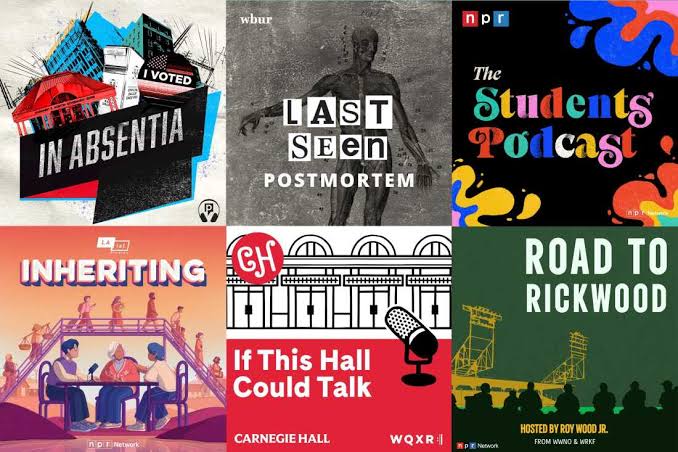
Where the numbers sit now for NPR podcasts
That rebuild is visible in the output. Looking at NPR’s current YouTube presence, the pattern from 2023 has inverted: episodes produced with video in mind are averaging around 20,000 views in their initial launch window, while audio-only episodes uploaded with a static image sit closer to 2,000.
Roughly a tenfold difference, from the same publisher, in the same period, with the same editorial standards behind both.
That is the hierarchy in one example: Video can earn the reach more easily. But having video alone doesn’t automatically earn the return.
NPR always had the second part with its quality content. What changed is that they stopped forfeiting the first.
And there’s a detail in Campbell’s comments worth holding onto, because it’s the whole argument of this piece in one sentence from someone with no reason to be making it. NPR, he said, won’t be recording every show and posting a video for every episode.
Not every show becomes a visual product. That judgement, about which shows are watched and which are listened to, is exactly the line YouTube has now drawn in its own product.
Why does YouTube’s RSS upload hurt podcast performance?
Here’s the part that deserves more attention than it gets.
When YouTube added RSS ingest for podcasts, it made publishing frictionless for existing audio-only podcasts to “be on YouTube”. By submitting your podcast RSS feed like you do at Apple Podcasts and Spotify, YouTube automatically generates a static-image video using your show artwork.
One step, no production required. But this produces exactly the format that underperforms on YouTube.
The numbers bear this out. A 2024 survey found that of podcasts on YouTube, 61% upload audio with a static image or audiogram; only 41% publish full video. Podtrac’s analysis of the top 250 US podcasts found just 22% posting full video episodes, 67% posting inconsistently or not at all, and 11% posting audio-only over a static image.
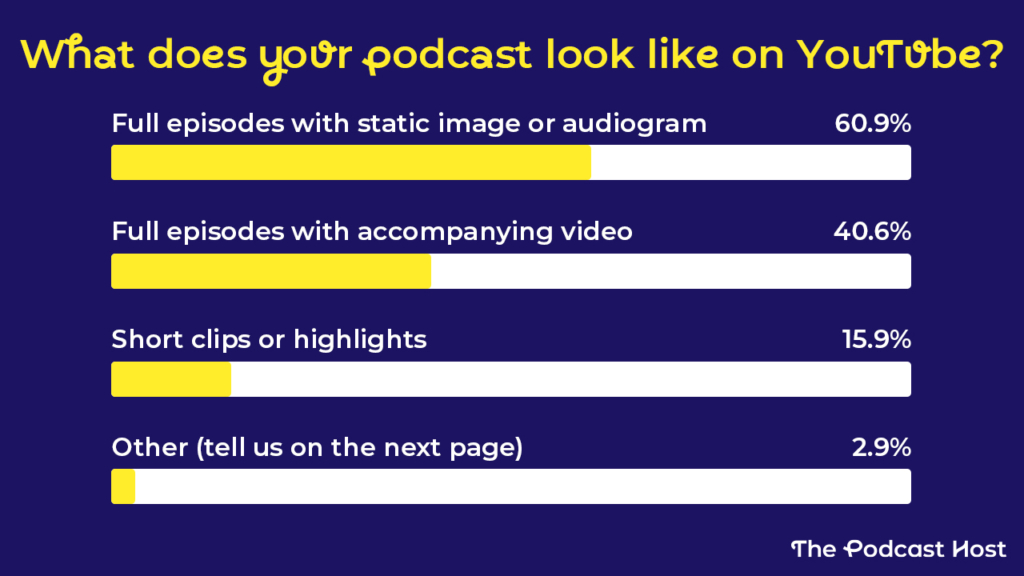
The easiest path onto the platform is the one least likely to work on it — which matters most if you’re planning to start a podcast in 2026.
When YouTube introduced RSS ingest in 2023, most audio-only shows took it. It was there, it was free, and it required nothing.
But YouTube has always been a video platform. If your podcast has arrived there by feed alone, NPR’s reckoning is the argument for rethinking where video sits in your strategy. Not as a production upgrade per se, but as the thing that decides whether anyone finds the work at all.
And with Shows now available as a category of its own, the floor has moved again.
What is the difference between a YouTube Show and a video podcast?
Both are filmed. The difference is which hours of the day they compete for, and whether they assume anyone is looking at the screen.
A Show is built for the living room. Screen required. Binge-shaped. Seasons, finales, poster art, a browse grid engineered to pull you into the next episode. It competes for the evening, against everything else on the television.
That’s a real and enormous market. YouTube reported that viewers watched over 700 million hours of podcasts on living-room devices in October 2025, up from 400 million a year earlier, and that it reached a billion monthly podcast viewers.
YouTube has been explicit about what Shows is for. Announcing the living-room numbers, it described rolling out the creator shows interface to support the shift to the big screen and help viewers find their next binge-worthy podcast.
Binge-worthy is their word, not mine.
None of which is surprising once you look at what YouTube’s ranking signals have always favoured: watch time and session length, which is closer to what a television network optimises for than what a podcast app does.
Apple Podcasts and Spotify reward the return: subscriptions, completions, the listener who comes back next week. YouTube rewards the next episode, right now. “Shows” simply make that explicit — Continue watching and Recommended shows buttons are session-extension machinery, and the feature gives TV-shaped content a home built around it.
In comparison, your podcast on Youtube will now be competing for completely different hours.
The drive or commute to work. The workout on the treadmill. The solo walks, with or without a dog. The dead time between meetings when you need some inspiration. Essentially, you are fighting for “companion-shaped” attention, in parts of the day nobody is sitting down to watch anything.
How do you tell if you’re making a show or a podcast?
There’s a simple way to tell which one you’re building, and it has nothing to do with production value:
Does the episode survive the screen going dark?
Because a lot of the time, it does go dark. Your audience is driving. They’re on a jog. The phone is face-down on the desk with AirPods in.
If the picture is carrying the argument, you’ve lost them. If the argument holds without the picture, you’ve built something that can occupy the one genuinely uncontested hour a busy professional has in their day.
That’s a podcast. Filmed, clipped, distributed on YouTube like everything else, but engineered around an audio core that keeps working when the eyes leave the screen.
Or in the words of James Cridland, editor of Podnews:
It’s “something for your ears when your eyes are busy”.
Is YouTube Shows good or bad for podcasters?
For the last few years, saying “we have a podcast” told a prospect almost nothing. The word covered a comedy panel show with a live studio audience and a fifty-minute conversation about capital allocation. Same label, nothing in common.
Worse, the celebrity-fronted version set the benchmark: elaborate sets, big crews, massive followings. Plenty of people with something genuinely worth saying looked at that and concluded podcasting wasn’t for them, because they were never going to out-produce it.
They were right. They just didn’t realise they never had to.
Because all of that was a Show. YouTube has now moved it to its own shelf, with the retention machinery to match. That content will migrate over there.
What’s left is the part that remains valuable for podcasters: a voice, a perspective, an hour with someone who’s actually listening. A place to work through ideas with the kind of curious, intellectually engaged people who come back. They returned to your channel, not because an algorithm nudged them, but because there was a mind worth returning to.
That may be a smaller category than podcasting was in 2025. But it’s also, finally, a clearer one which will allow it to grow.
Clear enough that a serious professional can say “I have a podcast” and have a client understand something true about what they’ve built: not entertainment, not a bid for the evening, but a thought-led medium built on trust.
How should you build a podcast now that Shows exists?
Film it, and stop debating that. Video is the price of distribution. NPR settles the question — even world-class audio is close to invisible without it.
Don’t compete on production scale. You will not out-produce a network-backed show, and now that those shows have their own category, you don’t need to. The standard worth holding is the one that earns distribution and respects the viewer: well-filmed, well-lit, clean, credible. Past that point, spending buys spectacle, and spectacle isn’t what a professional audience returns for.
Engineer the part that survives the screen going dark. This is the layer almost nobody works on, because it can’t be bought by the hour or fixed in an edit. It’s decided at the concept stage: what the show is about, who it’s for, and what specifically brings someone back next week.
The prevailing advice tells people to film. It doesn’t tell them what makes anyone come back.
Which is why most podcasts don’t fail loudly. They fade, quietly, around episode five, when the host runs out of things the show is actually for. That isn’t a production failure. The camera was fine. It’s usually the podcast concept underneath it that was never properly built to sustain twenty episodes.
What actually earns the return for your podcast?
If we look at what YouTube built into Shows — Seasons, “Continue watching”, “Recommended shows” — every mechanism points at one outcome, and it isn’t reach.
It’s the return. The second episode. The checking-in next week. The viewer who comes back without being chased.
That tells you something worth anchoring as you create video content moving forward:
The most valuable thing on the biggest video platform in the world is the same thing a podcast has always been trying to earn. Shows and podcasts are not opposites. They compete for different hours and they speak to their audiences differently, but they are built toward the same end.
One of them is trying to own your evening. The other is trying to own the hour nobody else is competing for.
But both live or die on whether anyone comes back.
The difference is that YouTube can hand you the machinery and cannot hand you the reason.
Seasons, poster art, episode numbering, a browse grid: that’s the packaging layer, and as of this month it’s free. Anyone in the Partner Program can have it by lunchtime. What no platform can give you is an idea worth building twenty episodes on, a specific person the show is talking to, and a reason for them to come back next week.
That work is the least glamorous part of the process. It happens on paper, before any guest is booked, before a camera is switched on. It doesn’t photograph well and it doesn’t feel like progress. But It is also the only part that determines whether the rest was worth doing and whether your audience will return for your ideas, discussions and insights.
Engineered properly, the episodes compound. The body of work keeps earning long after the launch window closes.
Engineered badly, or not at all, you get a beautifully filmed Season 1 and no Season 2 to follow.
Most people never find out which one they have until they’ve launched, spent the money, and watched their podcast fade.
Now, you don’t have to be one of them. The Backbeat Podcast Lab exists to answer that question first: one pilot, real feedback from the audience you actually want. And a clear sense of whether there’s a show worth building to turn podcast conversations into conversions for your brand or your business.
Sources
- YouTube Help, “Shows on YouTube” (July 2026)
- Edison Research at SSRS, The UK Podcast Consumer 2026, via Podnews (July 2026) — platform preference figures
- Bloomberg via Tubefilter (May 2023) — NPR, New York Times and Slate download-to-YouTube-view comparison, and the Life Kit video increase
- NPR Public Editor, “The podcast world is massive. Where does public radio fit in?” (August 2025) — Collin Campbell on NPR’s video strategy
- Backbeat Studios observational analysis of NPR’s YouTube channel (July 2026) — comparison of launch-window views for video-produced versus static-image episodes
- Bloomberg (June 2026) — Apple Podcasts video push and Acast consumption figures
- Podtrac, An Audience Analysis of Audio + Video Podcasts That Post to YouTube — top-250 video publishing breakdown
- The Podcast Host (2024) — survey of static-image versus full-video uploads
- YouTube Official Blog, “How podcasts took over the living room in 2025” (December 2025) — living-room viewing hours, monthly podcast viewers, and the Creator Shows interface