
The Match Doesn’t End At The Final Whistle Anymore
A few years ago, when the final whistle blew, the experience was largely over.
Today, that’s often when the “second game” begins.
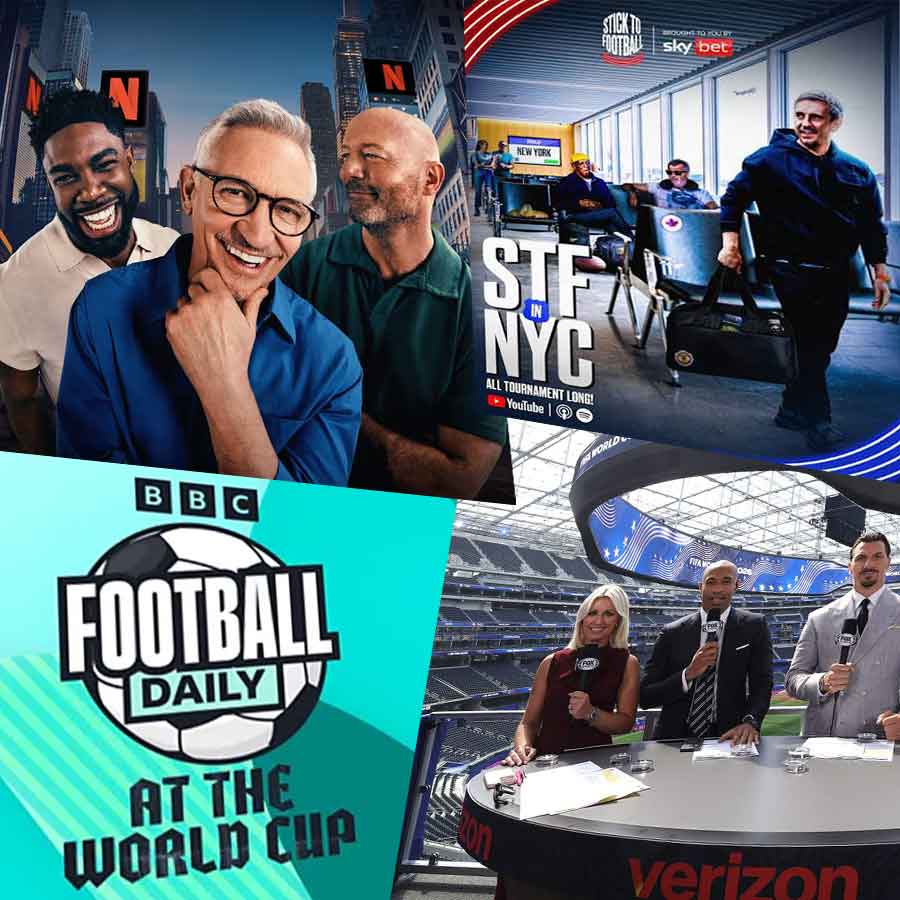
Fans head to Netflix and queue up The Rest Is Football.
Or maybe they watch Thierry Henry and Zlatan Ibrahimović dissect the match on Fox.
Later in the day, they scroll through YouTube for reaction clips, tactical breakdowns and more post-match debates.
For many fans, the football match has become only one chapter of a much longer experience.
The 90 minutes still matter, of course. But increasingly, they are also the raw material for something else — hours, and sometimes, days of additional content built around analysis, banter and personalities.
And the audiences for these shows are no longer trivial. Some are attracting hundreds of thousands, and in certain cases, millions of viewers and listeners around the world.
Which raises an interesting question.
Why are so many people choosing to spend more time watching people talk about football after they’ve already watched the football itself?
Why are so many people choosing to spend more time watching people talk about football after they’ve already watched the football itself?
I think the answer says something rather interesting about where the future of podcasting is heading.
In fact, it reinforces something I wrote earlier this year about “podcasting going through an identity crisis“. The rise of video, celebrity-led shows and streaming platforms is fast reshaping what people expect from the medium.
On this page

The Numbers Are Impressive. The Metrics Are Messi-er.
At first glance, this year’s World Cup coverage seems to produce a simple leaderboard.
Fox Sports’ coverage of the 2026 World Cup reportedly averaged 2.4 million viewers per day during the group stages, and setting record numbers for games featuring the USA team.
The BBC’s Football Daily podcast is reportedly seeing peaks of nearly 250,000 daily streams, with over 100,000 views per episode on iPlayer alone.
The Rest Is Football has become Netflix’s first podcast to break into its UK Top 10.
Meanwhile, Overlap’s Stick to Football continues to dominate YouTube and social video, consistently getting at least 700k views on YouTube for each new episode in the first 24 hours of its release.
The temptation is to put all of these numbers side by side and declare a winner.
But that would probably miss the point as these shows are playing entirely different games.
Fox is optimising for mass broadcast television.
The BBC is leveraging the reach and habit of public service media through an audio podcast and iPlayer.
The Rest Is Football is trying to prove that audiences will follow personalities onto a premium streaming platform.
Stick to Football is leaning heavily into free distribution and social reach.
So what we have are — different platforms, different business models and different metrics.
Looking at these shows side by side, there are three interesting patterns worth having a think about.
The Future of podcasting.
Insight #1: It’s more than podcast versus TV. It’s about the distribution model.
Netflix made headlines earlier this year when it signed The Rest Is Football team as part of its World Cup coverage strategy.
The show is reportedly averaging between 100,000 and 140,000 daily streams and became the first podcast to break into Netflix’s Daily Top 10 chart in the UK and a couple of other countries.
Although some British media outlets have framed the BBC’s Football Daily podcast — peaking at nearly 250,000 daily streams during the tournament — as the winner over Lineker’s show, this is a false comparison.
The real contest isn’t between Netflix’s made-for-TV-streaming podcast versus the BBC audio-only format.
I would say that The Rest is Football‘s direct competitor has always been Overlap’s Stick to Football for the last couple of years.
Both shows are remarkably similar on paper.
Former football professionals on the panel, with some strong personalities amongst them to create tension and arguments in their conversations.
And for the World Cup, both teams have established their bases in New York to be close to the tournament action.
Yet their strategies could hardly be more different.
Netflix’s 40-episode daily deal with The Rest Is Football podcast is a bet that audiences will follow beloved personalities onto Netflix — even if that meant temporarily giving up the open distribution and easy access their audience has long enjoyed.
Stick to Football, well, sticks to what has been working exceptionally well for them, ie. staying free and dominating the online content ecosystem through highly-shareable YouTube and social clips.
Neither approach is necessarily right or wrong.
But the broader implication is that these two approaches reflect fundamentally different views of the future of podcasting.
Netflix is betting on destination value, believing that a handful of premium personalities and must-watch shows can persuade audiences to come directly to its platform and spend more time inside its ecosystem.
In this model, exclusivity matters. Content becomes a reason to subscribe or stay subscribed, and for people to develop a habit of opening Netflix beyond just drama series and films.
The risk, however, is friction.
Podcasts have historically thrived because they are open and ubiquitous. The audience can consume them wherever they want, through whichever app they prefer.
By placing a show behind a single paywall platform, even temporarily, it introduces a layer of inconvenience for audiences who wouldn’t break their established listening habits and would rather seek out alternatives instead.
Stick to Football, on the other hand, is betting on distribution over destination.
Its strategy is to be everywhere: on YouTube, on social feeds, in podcast apps, and in group chats. The goal is maximum reach and cultural relevance.
Every clip becomes a marketing asset, every share creates another discovery opportunity, and every platform becomes a distribution channel.
The trade-off is that while this model can generate enormous reach, it can be harder to capture all of the value that reach creates. Audiences may consume snippets rather than full episodes, and attention is ultimately rented from platforms whose algorithms can change at any time.
In many ways, this is a modern version of an old media debate:
Build a destination that people deliberately visit?
Or, distribute your content as widely as possible and follow the audience wherever they are.
The answer may ultimately depend on the strength of the relationship between the audience and the personalities involved.
If fans are deeply attached to the hosts or the regular guests, they may follow them anywhere, even onto a closed platform like Netflix.
If not, convenience likely wins.
Insight #2: Great shows need characters and storylines, not merely personalities.
Fox Sports’ World Cup studio programme featuring Zlatan Ibrahimović, Thierry Henry, Rebecca Lowe and Alexi Lalas has probably generated some of the most viral moments of the tournament thus far.
None more so than the exchange in which Zlatan appeared to imply that Lalas simply did not understand football.
View on Threads
There have since been numerous follow-up jabs between the two on the subsequent daily shows and what began as a single moment now feels like a running storyline of its own.
It has probably attracted plenty of casual viewers — perhaps even some non-football fans, because people simply want to see where it goes next.
Good shows rarely work on personalities alone.
You need characters with traits that create tension. The tension creates a storyline that drives the viewers along.
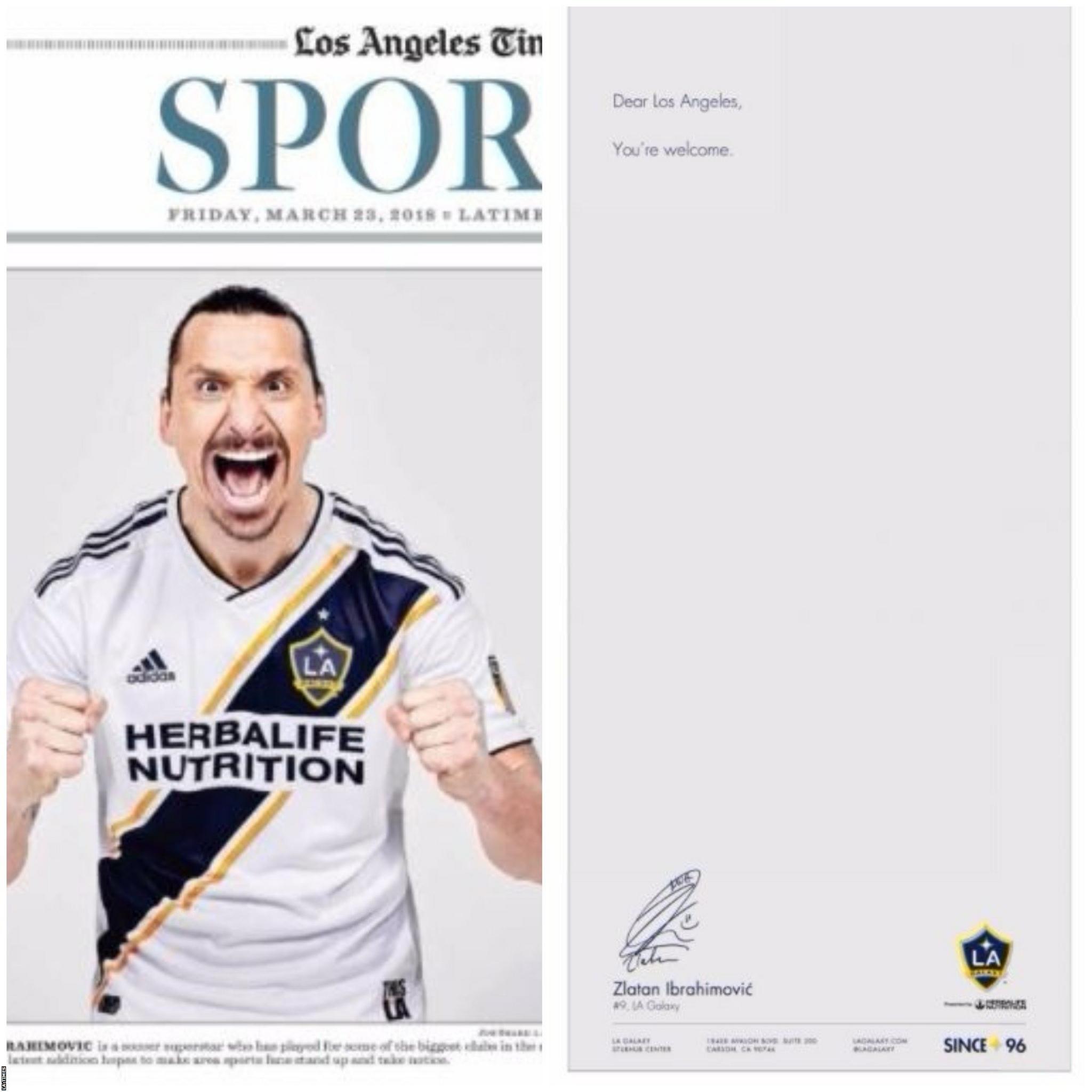
Now, Zlatan has always been quite a character. This is, after all, the footballer who took out a full-page advertisement in the Los Angeles Times to announce his own arrival at LA Galaxy back in 2018.
Whether the animosity between the two is genuine or entirely manufactured, I have no idea. Many fans certainly think it is real …
My own suspicion is that it is something slightly more interesting than that.
It’s classic American show engineering that even great podcasts now use to get audiences hooked.
The “we can’t stand each other” dynamic between the two, perhaps better known as the Enemies-to-Lovers or Bickering Rivals trope in storytelling, has existed for decades because it works.
The two characters start off on the wrong foot, developing mutual hatred or extreme annoyance for each other.
What follows is a display of sharp, witty banter, or even sabotage, escalating the tension further.
Stick to Football has run this play for years by pairing Neville and Carragher together. Rival defenders who couldn’t stand each other, now ironically “hating” each other for a living.
And, crucially, you keep watching. Will they eventually respect one another? Will the rivalry intensify? Will they end up unlikely friends?
You want to know what will happen next.
For the storyline of “Zlatan and Alexi”, we still have a couple of weeks of tournament coverage to find out.
In many ways, this is no different from the mechanics that make reality television, sitcoms and Hollywood buddy comedies work.
Characters are created or chosen to create expectations and tension.
Tension creates moments that audiences remember and want to experience again.
And this may actually be good news for brands and businesses considering a podcast.
Because it means you do not necessarily need celebrities.
You do not need a former England captain or one of the greatest footballers of all time.
What you do need is a cast that works.
In podcasting terms, that means different perspectives, different ways of seeing the world.
And you probably need characters of different temperaments to make the audience stick around.
Which is also why a show built around two highly analytical people who largely agree with each other can sometimes feel flat. The information may be excellent, but there is often very little narrative tension pulling the audience back for the next episode.
But if the dynamics between them are compelling enough, audiences can still develop the same sense of familiarity and attachment that keeps them coming back episode after episode, even if they aren’t as famous as Zlatan for now.
Insight #3: Everyone is about to chase the wrong thing.
One of the reasons podcasting took off in the first place was that the barrier to entry was torn off its hinges.
You didn’t need a studio. You didn’t need a broadcast licence. You didn’t need permission from a network executive.
A microphone, a camera or two, and something worth saying was enough.
The invisible thinker suddenly had a way to become visible. The niche expert could find their tribe. The founder, the investor, the practitioner could slowly build what I’ve called a mind worth returning to.
For nearly two decades, that openness was the whole point.
Then Netflix walked in. And what happened next?
Barely six months into the Netflix podcast experiment, the conversation shifted. Suddenly everyone is talking about production values.
Television-quality lighting. Elaborate sets. Multiple camera angles. Whether a podcast should look good enough to hold its own on a 65-inch screen in the living room.
The bar to entry, so carefully torn down, is quietly being raised again.
It’s the downstream cost of the Netflix model, which I highlighted in Insight #1. When you bet on destination value, the set has to look like a premium product, because the set is now part of what you’re selling. Fair enough for Netflix.
The problem is that everyone else watches the biggest player in the room and assumes that’s the game they’re supposed to play too.
So the arms race begins. Better cameras, bigger studios, more gear, and a quiet, constant anxiety that the show doesn’t look expensive enough yet.
For most brands and businesses, this is a trap. A race you were never going to win and never needed to enter.
Because looking again at what actually pulled audiences back across every one of these World Cup shows — audio-only podcast, Netflix show, YouTube programme, traditional broadcast, nobody came back for the set.
They came back because something was unfinished. A relationship they’d become invested in. A character whose take they wanted to hear. An argument they wanted to see continue. Or simply expertise insights that they know only ex-professionals could provide.
Which is the good news nobody in the arms race seems to notice.
Because, in essence, these are elements you can’t buy, but you can design — before you book a studio that has the podcasting mics and cameras for hire by the hour.
Which brings us back to the only question that ever mattered when designing a show:
Who, or what, is the audience coming back for?
Not “what microphones should we buy?” Not “how should the studio look?”
Because if there isn’t a person, a dynamic, or a story compelling enough to make someone return for the next episode, no amount of production quality is going to rescue it.
The expensive things — the sets, the rigs, the celebrity panel — turn out to be the things that were never doing the work.
The one thing that was doing the work is available to anyone willing to think about the value, concept / storyline, and distribution of your podcast beforehand.
This requires more of your attention and judgment, and if there’s any budget considerations to be made, it would be better spent on the pre-production planning for your podcast.
What This Says About The Future Of Podcasting
Six months ago, “podcast” mostly meant a microphone and an idea. Today it can mean a Netflix deal, a studio in New York, and a panel of former internationals.
The medium is stretching. And the question of What Makes A Podcast, A Podcast? keeps coming back in my head in recent months as the biggest player in the room produces podcasts resembling a television programme.
But strip away the platforms and the production budgets, and every show that worked this tournament worked for the same reason.
Fox didn’t hold audiences with cameras. It held them with Zlatan and Lalas refusing to get along.
Netflix isn’t betting on lighting. It’s betting that you’re attached enough to certain voices to follow them behind a paywall.
Stick to Football isn’t dominating YouTube because of its set. It’s dominating because people want to be in the room with those particular people, arguing about that particular game.
So yes, the future of podcasting may involve better cameras and bigger studios with more media networks referencing Netflix’s playbook, and the arms race over how a show looks will get louder before it gets quieter.
But the fundamental challenge is exactly what it was twenty years ago when podcasts started, back when all you had was a microphone and something to say.
Give people a reason to come back for your next episode.
Everything else is about the set is like a choice between caviar and the crouton for your salad.
Thinking about starting a podcast but not sure whether the idea will work?
At Backbeat Podcast Lab, we help founders, brands, and experts pressure-test the one thing production quality can’t fix: whether there’s a reason for anyone to return.
Before you think about mics or studios, it’s worth knowing whether the show has a spine worth your time and investment.
Learn more here: https://www.biggerbetterbackbeat.com/backbeat-podcast/the-podcast-lab.html